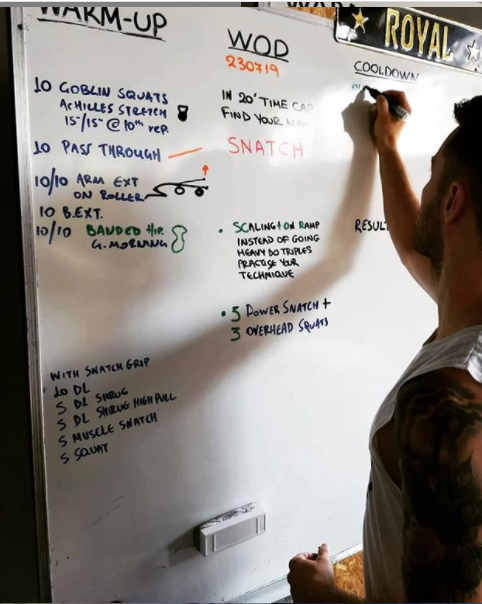
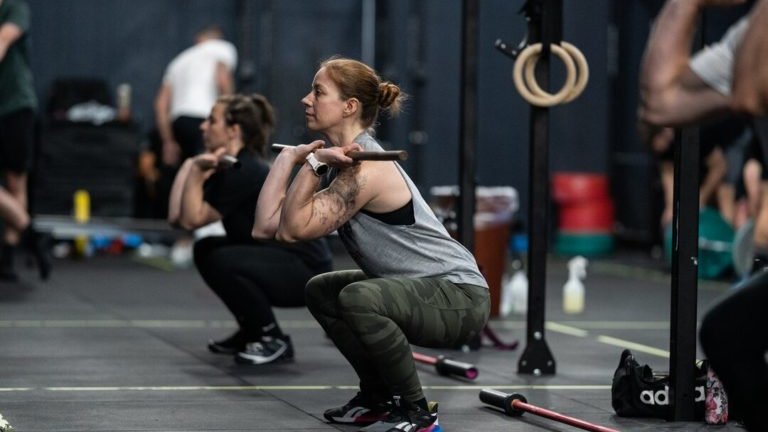
When someone looks at the workouts of a CrossFit gym, they might not understand how they are created. The fact that the program is different every day and not linear and repetitive, as in classic gyms, the sheer variety of exercises used in CrossFit, the combinations, and the number of repetitions might make anyone think that there is no real structure behind how a CrossFit workout is built and that it comes down to a random choice of exercises and reps. Of course, that isn't true.
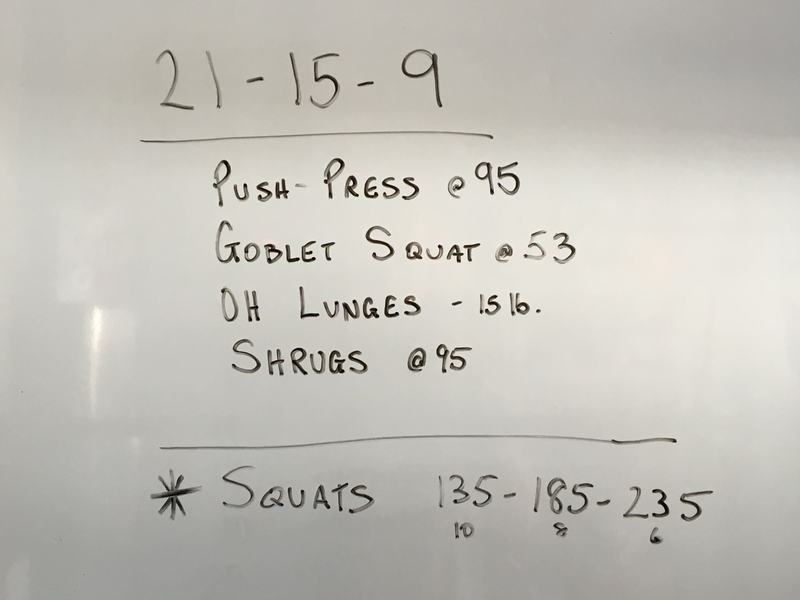
Every day, in every box on the planet, a new workout is "born." But what should a coach take into account when programming for the gym and creating workouts? What are the elements that bring balance to the programming and bring athletes closer to their desired result?
Before we look at these elements, we should consider what the goal of someone choosing to do CrossFit actually is. CrossFit improves overall fitness and the ten physical skills that make it up: cardiovascular endurance, stamina, strength, flexibility, speed, power, coordination, accuracy, balance, and agility. Anyone choosing CrossFit should keep in mind that all these parameters should develop and coexist in harmony, without any one of them taking over the others. Someone who is very good at lifting weights but not so good with endurance work will see their endurance improve through CrossFit training without losing strength — something that would not happen if they only trained endurance and never trained strength.
So, since we're talking about CrossFit, the overall goal of training should be nothing other than developing an athlete's fitness across all ten parameters — not specialization, meaning developing one at the expense of the others.
One thing that should always happen is recording workouts on a weekly, monthly, and quarterly basis, so the coach has an overall picture of the workouts they're programming, gets feedback from them, and corrects any mistakes. A results board is great feedback for a coach who wants to see the gym's overall progress.
For example, seeing that on heavy workouts and heavy days the box's members, on average, score well, while on more cardio-heavy programs they collectively fall behind, a coach should take that into account and include more cardio workouts in the programming. Looking at the board, they should see how many members did a muscle-up in a WOD a quarter ago and how many can now, or what the average time on "Fran" was six months ago and what it is the next time it's programmed. All of this gives information that helps a coach re-evaluate their programming and make the changes that are needed.
Let's look at the parameters that need to be considered to design a workout.
- The duration of the workout. 0–5 minutes, 5–10 minutes, 10–20 minutes, 20+ minutes. Each different duration serves a different energy system. Generally speaking, the shorter a workout is, the more intense it is — a greater reliance on the anaerobic system — and the longer it is, the more the aerobic system is involved. Depending on the combination of the other parameters below, such as load or reps, the energy systems combine and overlap. For example, in a twenty-minute workout, which is generally considered aerobic, if it includes near-maximal lifts, the anaerobic system gets involved too.
- Total repetitions. Low, moderate, or high. Low reps usually involve more complex movements and heavier loads, while high reps usually involve easier movements and lighter loads.
- Whether it's a time-priority or work-priority workout. That is, whether it's an AMRAP — as many rounds as possible — where the time is fixed and the goal is to produce as much work as possible, or a For Time workout, where the number of reps is fixed and the goal is to finish as fast as possible. AMRAPs tend to run longer than For Time workouts and are more tempo-based — the athlete works to hold a steady pace throughout for the best result. For Time workouts, on the other hand, tend to be more intense, since the goal is chasing the clock.
- Which exercises to use, and from which category — gymnastics, weightlifting, or metabolic conditioning — and how often to use them within a month. Whether the movements are pressing or pulling, upper body or lower body.
- How many exercises to use in each WOD — one, two, three, or more — and which categories to combine.
- Which muscle groups worked in previous sessions, so they get time to recover, or any other special considerations. For example, if one day's workout included 100 pull-ups, it might not be a good idea to program a WOD with lots of toes-to-bar in the days that follow, since most people's hands will need time to recover.
- If it includes gymnastics movements, how many of them, and how many are simple (e.g. push-ups, pull-ups) versus complex (e.g. muscle-ups, pistols)? Complex movements shouldn't be reserved only for elite athletes — progressions and scaling let everyone benefit and let the whole class feel like they're working on the same exercise together.
- If it includes weightlifting movements, how many are simple (e.g. back squat) versus complex (e.g. snatch).
- What loads to use — heavy, moderate, or light?
- If it includes metabolic conditioning movements like jump rope, running, rowing, biking, or skiing — what distances or other units of work, e.g. calories, to use. The energy demands of running 400 meters are different from running 1000 meters, so it's important to keep some variety.
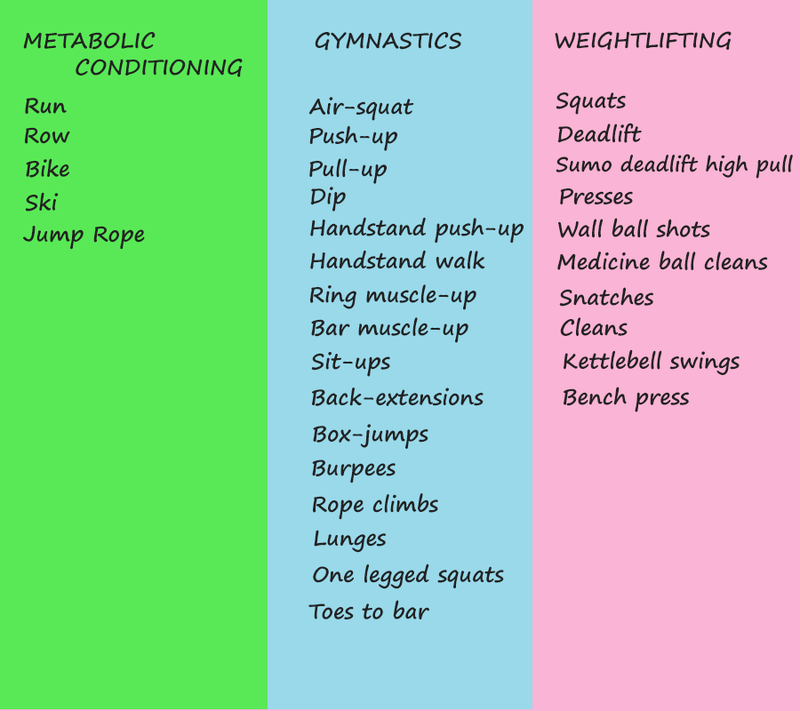
In the table above, the weightlifting category has far more exercises than it first appears, once you account for every variation of each movement and the different equipment available. For cleans, for example, we can program a power clean, hang power clean, squat clean, or hang squat clean, and use a barbell, dumbbells, kettlebells, or a d-ball.
- Strength training – heavy day. CrossFit is strength-and-conditioning training, which means every 3–6 sessions should include one dedicated purely to building strength. Here the coach needs to choose which movements to use — Olympic lifts or more fundamental ones like squats, deadlifts, or presses? What rep scheme? Single reps, e.g. 1-1-1-1-1, purely for maximum strength? A pyramid, e.g. 5-3-3-1-1, to work up through sub-maximal loads until finding the best rep? Or a scheme that stays sub-maximal throughout, e.g. 3-3-3-3-3?
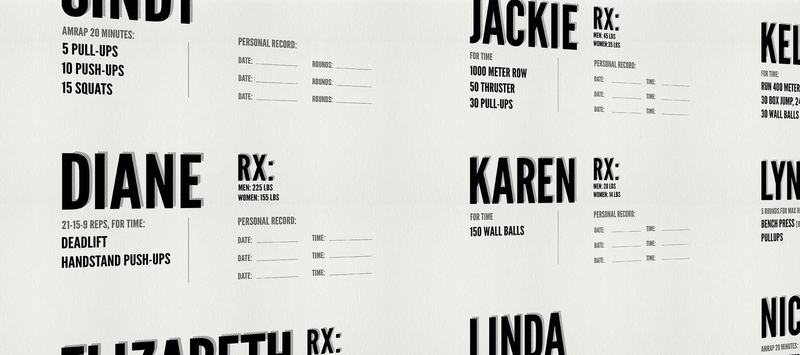
- Using benchmark workouts. CrossFit's named workouts with female names ("The Girls"), Hero workouts, or a workout from a previous year's Open. How many of these to use in the programming as a test of the gym's overall fitness? One or two every ten to fifteen days is a good rule of thumb.
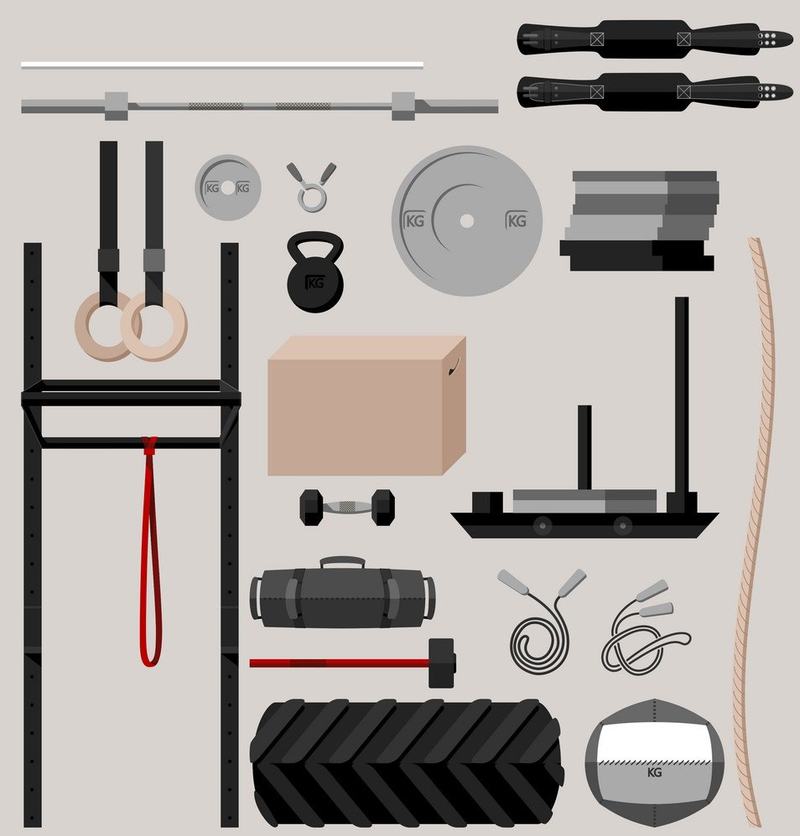
- What equipment the gym has, so as much variety as possible can go into the programming. Even performing the same exercise, your muscle fibers fire differently depending on the equipment used — a front squat with a barbell is a different stimulus than one with dumbbells, kettlebells, or a sandbag.
- What scaling options to use each time. Beyond the base movement, it's worth paying attention to the scaling used — for pull-ups, for example, the scaling should vary each time rather than always defaulting to, say, jumping pull-ups.
To sum up, what all of this shows is that variety is one of the fundamental factors in programming CrossFit workouts. Don't get fixated on creating the "perfect" program, because it doesn't exist — but do make sure there's a balance across all these factors. Anyone just starting out programming for a gym will need to keep notes on all of the above. As the years pass and experience builds, though, it becomes much easier and faster to put workouts together just by looking back at what came before.
Constantinos Pallikaris
Physical Education and Sports Science Graduate
Certified CrossFit Level 3 Trainer, PN Level 1 Coach
Co-owner & Coach, Royal CrossFit