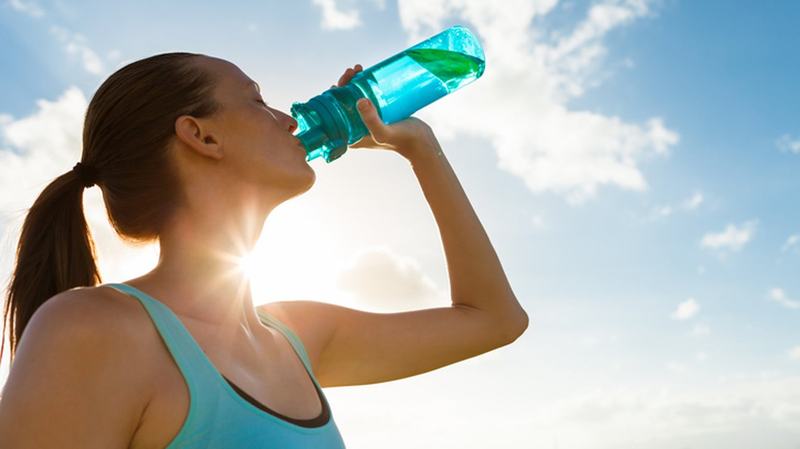
We all know that we can't live without water and that our body is made up mostly of it — about 60%. Water — at varying percentages — can be found in our muscles, our blood, adipose tissue, and many other cells (both inside and outside them).
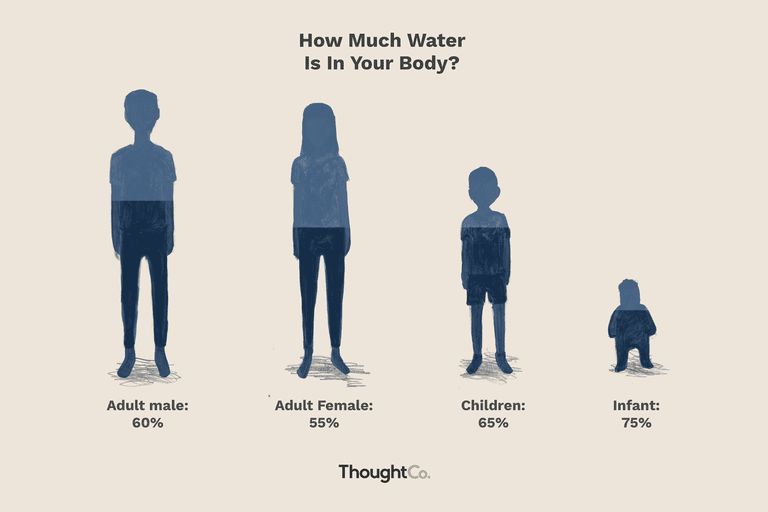
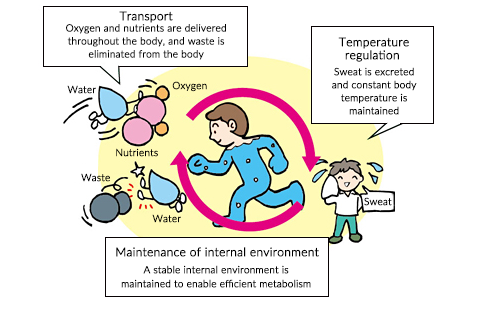
From this percentage alone, we can understand how important water is for our body. More specifically, water functions as:
- A solvent for other substances. Water dissolves proteins and transports them throughout the body. It also delivers nutrients to our cells and removes waste from them. We need water to synthesize proteins, glycogen, and more.
- A catalyst for chemical reactions. Many chemical reactions in the body require water to occur.
- A lubricant. For example, in joints, eyes (which are 95% water!!!), and the spinal column. It also makes up the amniotic fluid during pregnancy.
- A temperature regulator. When we get hot, we sweat. When that sweat evaporates, we cool down.
- A source of minerals.
Water in vs Water out
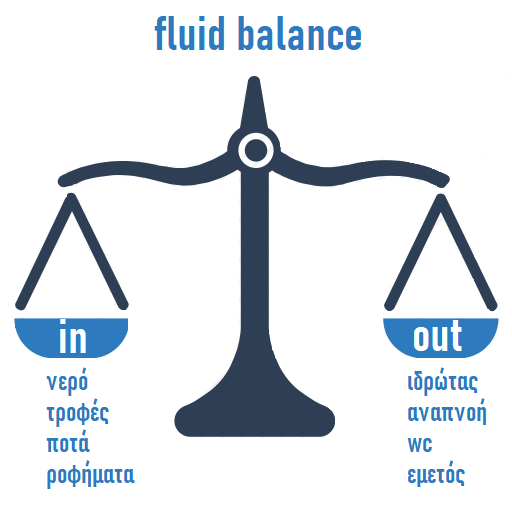
What every person should know and aim for is fluid balance in their body — that is, the relationship between the fluids they take in and the fluids they lose.
Fluids the body receives:
*From food we usually get about 1L of water, but the type of food matters a lot. For example, fruits and vegetables have much more water than foods high in fat, e.g. nuts, butter, cheese.
Fluids the body loses:
- Sweat, breathing, and going to the toilet.
- We also use water to produce saliva and tears.
- We also lose a lot of fluid when we vomit.
Besides fluid balance, there also needs to be a balance between water (the solvent) and the electrolytes in our body (the dissolved substance).
Electrolytes are mineral salts that carry an electric charge. They are sodium (salt), chloride, calcium, potassium, and magnesium. All of the above need to exist in specific proportions and balances in our body, and just as with water (balance between the water we take in and the water we lose) or with energy (balance between the energy we take in and the energy we lose), there also needs to be a balance between the electrolytes we take in and those we lose.
The role of electrolytes in the human body
Almost everything that happens in our body needs the presence of electrolytes. Electrolytes:
- Regulate the function of nerves and muscles
- Hydrate the body
- Balance blood acidity and pressure
- Help repair damaged tissues
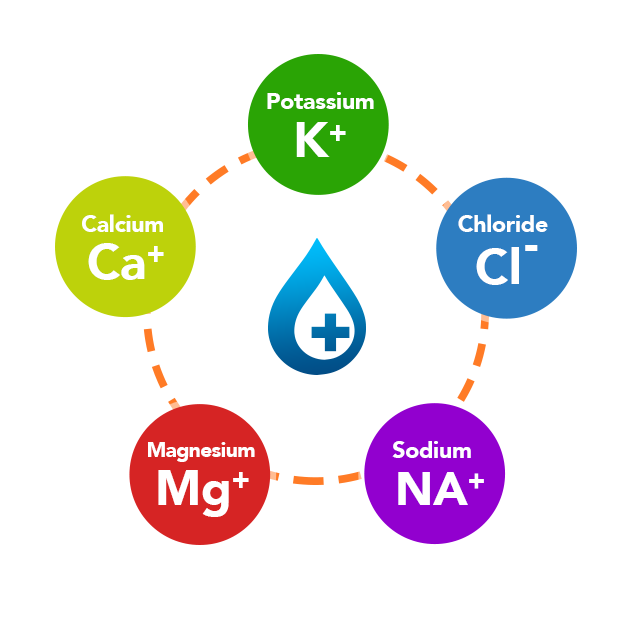
We get electrolytes:
- From food and fluids
- From isotonic drinks
- From electrolyte tablets
We lose electrolytes:
- Mainly through sweat
- Through urination
- A sudden drop in electrolytes occurs in situations like vomiting and diarrhea, or during prolonged physical exertion
From the above, we should keep this important point in mind: “Water together with electrolytes forms a solution. This solution needs to have a specific composition, which means that if we drink too much water the solution becomes diluted, or if we don't drink enough water the solution becomes concentrated. In the first case we get hyponatremia, and in the second, dehydration.”
Hyponatremia
When there is too much water in our body relative to electrolytes. It means we're drinking more water than we're losing.
Symptoms:
- Nausea
- Vomiting
- Headache
- Swollen hands and feet
- Confusion
Hyponatremia is a very serious and dangerous condition that requires immediate medical attention. In sports, it happens when someone, out of excessive eagerness to avoid dehydration, drinks very large amounts of water.
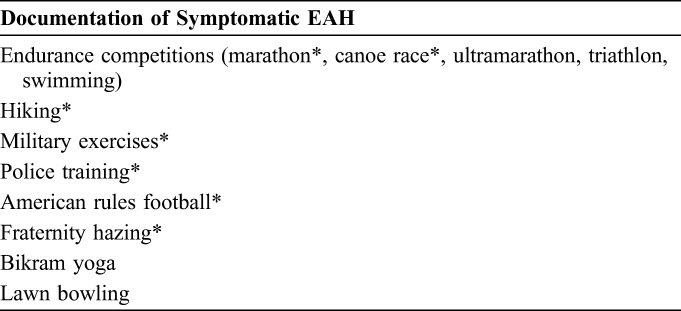
Dehydration
When there isn't enough water in our body. It means we're drinking less than we're losing.
Symptoms:
- Headache
- Fatigue
- Low blood pressure
- Dizziness
- Nausea
- Rapid heartbeat
Beyond certain levels, dehydration not only reduces our performance (aerobic capacity, muscular endurance, muscular strength) but can also cause serious damage to our body.
How much water do we need?
Every person is different. Different body types, different activities, different environments, etc. So our water needs differ from person to person too. Still, we can look at and follow some basic general principles and guidelines, and from there start looking at individual factors and adjusting accordingly.
One formula we can use is to drink 30-40ml of water per kilogram of body weight. If we don't want to bother with calculations, a good rule of thumb is:
“Most adults need 3L of fluids per day. If 1L comes from food, then we want 2L (about 8 glasses).”
Following the above and depending on the situation:
- If, for example, we're sick, or have had vomiting or diarrhea, then we definitely need more water and electrolytes.
- If it's hot, we might want an extra 500ml.
- If we're doing intense exercise, we want 500ml for every hour of exercise.
- Athletes involved in endurance sports (more than one hour) need more specialized advice from their coaches or nutritionists regarding both water and electrolytes, both for training and for competition.
Other factors that affect our water needs
- Temperature
- Humidity
- Whether we've eaten a lot of salt
- Whether we've had alcohol
- Whether we've been sweating
How many electrolytes do we need?
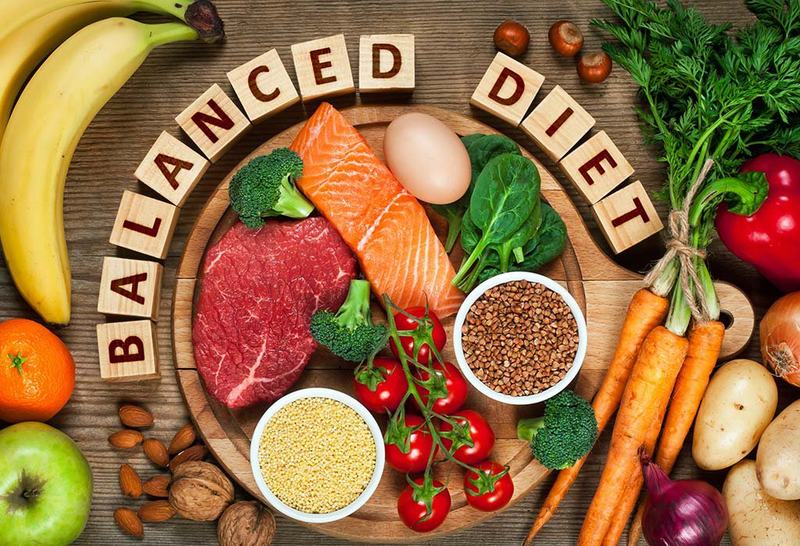
When it comes to electrolytes, how many we need depends on all of the above. Also, since we get electrolytes from food, it's very difficult to sit down and calculate the exact amount of electrolytes in every food item.
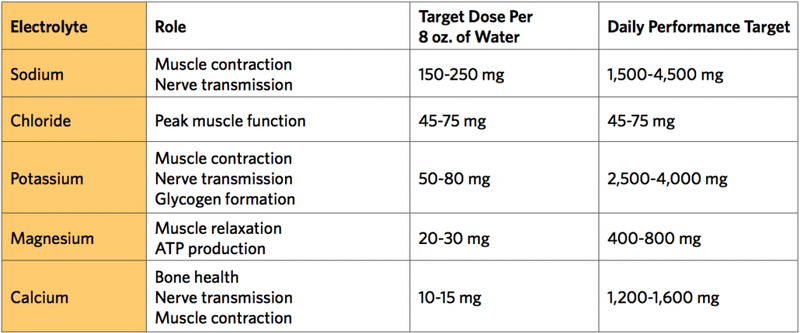
Practical tips:
- Instead of counting how many glasses of water you drink per day, keep a one-liter bottle with you at all times. Every time you notice it, take a few sips. The goal is to have drunk two of these throughout the day, plus anything extra depending on the factors above.
- Drink your first glass of water as soon as you get out of bed in the morning.
- Avoid processed foods that contain high amounts of salt, and stick to the rule: “Eat meat and vegetables, nuts and seeds, fruit, a little starchy food, and no sugar.”
- Avoid energy drink products on the market that promise to replenish electrolytes, since most of them contain large amounts of sugar and do more harm than good.
- If you do long-duration endurance training, consult your coach or nutritionist about the water and electrolytes you'll need.
Constantinos Pallikaris
Physical Education and Sports Science Graduate
Certified CrossFit Level 3 Trainer, PN Level 1 Coach
Co-owner & Coach at Royal CrossFit
- Precision Nutrition: The essentials of Nutrition and Coaching for health fitness and sport. Unit 2 The science of Nutrition, Chapter 13
- CrossFit Journal: Race Day Fueling by Max Wunderle
- Statement of the Third International Exercise-Associated Hyponatremia Consensus Development Conference, Carlsbad, California, 2015